Carbon Steel
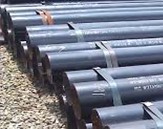
The main intermediate alloying constituent is carbon in the range of 0.12–2.0%.
The term may also be used in reference to steel which does not include alloy steels.
As the carbon percentage content rises, steel has the ability to become harder and stronger.
However, it becomes less ductile with less weldability, lowering the melting point.
Alloy Steel
On the contrary a steel which owes its distinctive properties to elements other than
carbon is called Alloy Steel. It is considered as that when the maximum of the range given
for the content of alloying elements exceeds one or more of the following limits:
- Manganese: 1.65%
- Silicon: 0.60%
- Copper: 0.60%
or a definite minimum quantity of any of the following elements:
- Aluminum
- Nickel
- Boron
- Titanium
- Chromium (up to 3.99%)
- Tungsten
- Cobalt
- Vanadium
- Columbium
- Zirconium
- Molybdenu
Small quantities of certain elements are unavoidably present in alloy steels. In
many applications, these are not considered to be important and are not specified
or required. When not specified or required, they should not exceed the following amounts:
- Copper 0.35%
- Chromium 0.20%
- Nickel 0.25%
- Molybdenum 0.06%
Galvanized Steel
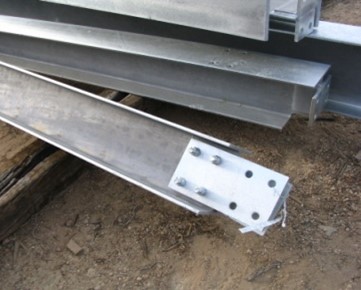
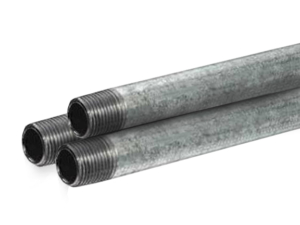
Coating with a layer of Zinc by immersing the metal in a bath of molten zinc at a temperature of 450 °C.
Galvanized steel is widely used in applications where corrosion resistance is needed without the cost of
stainless steel, and can be identified by the crystallization patterning on the surface (often called a
"spangle").
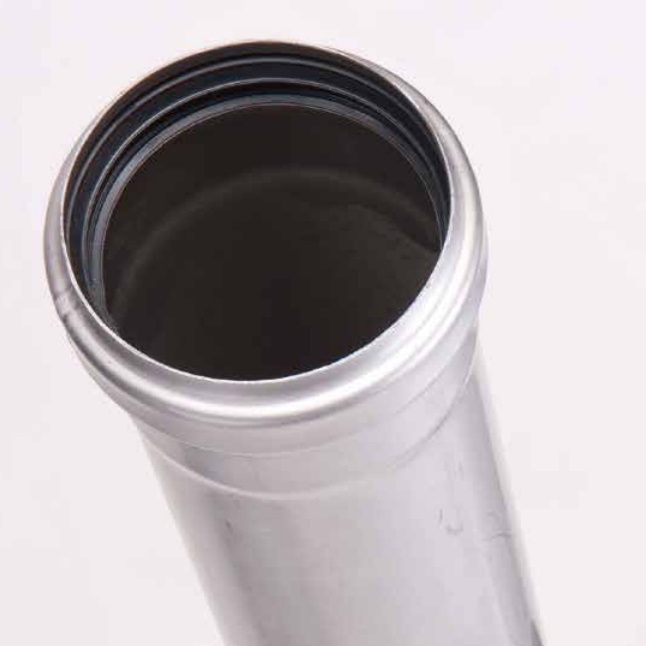
Stainless Steel (Inox)
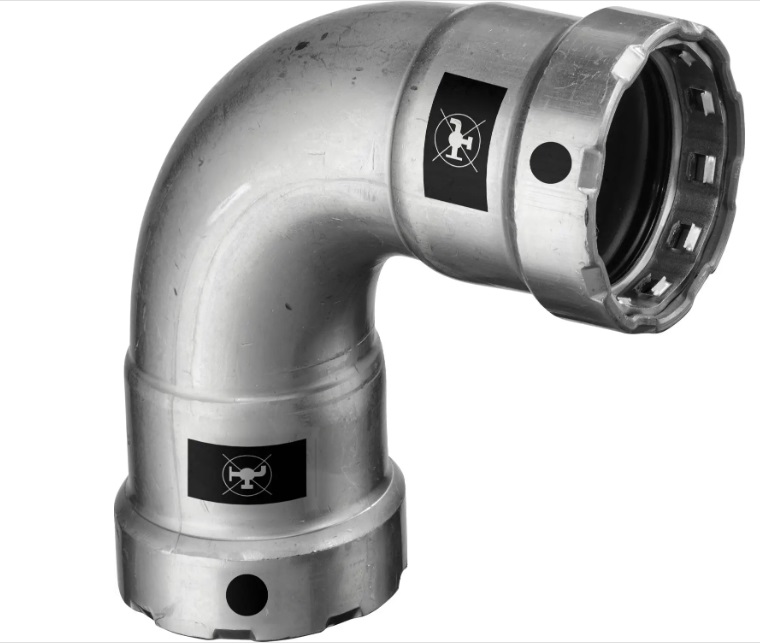
A steel alloy with a minimum of 10.5% Chromium content by mass. The chromium forms a passivation layer of
chromium(III) oxide (Cr2O3) when exposed to oxygen. The layer is too thin to be visible, and the metal remains
lustrous and smooth. The layer is impervious to water and air, protecting the metal beneath, and this layer
quickly reforms when the surface is scratched. High oxidation resistance in air at ambient temperature,
resistant to attack from acids. Is unaffected by any of the weak bases such as ammonium hydroxide.
Cast Iron
Cast iron is a group of iron-carbon alloys with a carbon content greater than 2%. Its usefulness derives from
its relatively low melting temperature with with main attributes to be hard and brittle because of the high carbon percentage.
The melting temperatures usually range from 1,150 to 1,200 °C, which is about 300 °C lower than the melting point of pure iron.
The alloy constituents affect its color when
fractured: white cast iron has carbide impurities which allow cracks to pass straight through; grey cast iron
has graphite flakes which deflect a passing crack and initiate countless new cracks as the material breaks;
ductile cast iron has spherical graphite "nodules" which stop the crack from further progressing. It is strong
under compression, but not under tension. Cast iron was invented in China in the 5th century BC and poured
into moulds to make ploughshares and pots as well as weapons and pagodas.Although steel was more desirable,
cast iron was cheaper and thus was more commonly used for implements in ancient China, while wrought iron or
steel was used for weapons.Cast-iron is used for Bridges, Buildings.
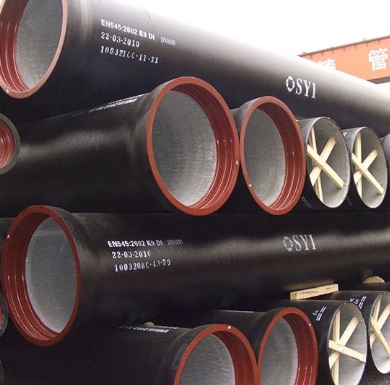
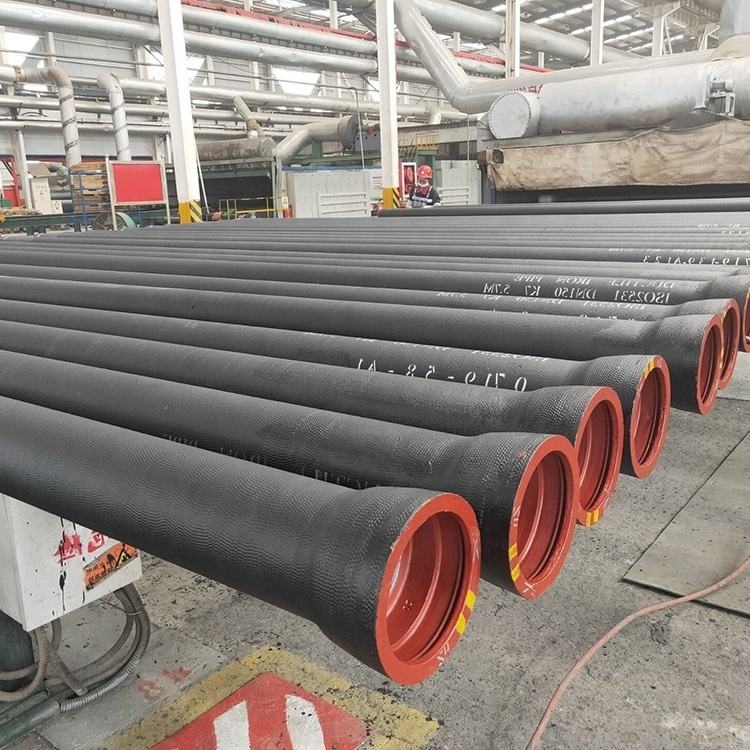
Ductile Iron Pipe
A cast ferrous material in which the free graphite is in a spheroidal form rather than a fluke form.
The desirable properties of ductile iron are achieved by means of chemistry and a ferritizing heat treatment of the castings.
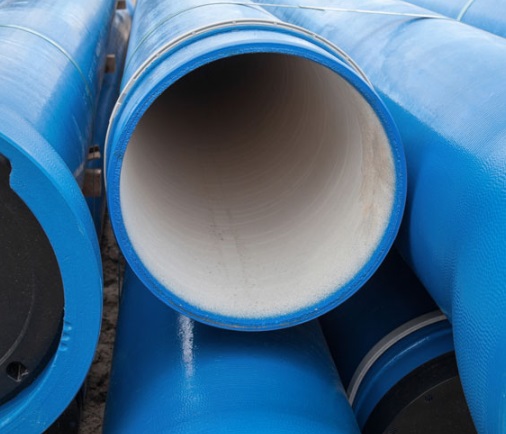
Ductile iron pipe is pipe made of ductile cast iron commonly used for potable water transmission and
distribution. This type of pipe is a direct development of earlier cast iron pipe, which it has superseded. The
ductile iron used to manufacture the pipe is characterized by the spheroidal or nodular nature of the graphite
within the iron. Typically, the pipe is manufactured using centrifugal casting in metal or resin lined moulds.
Protective internal linings and external coatings are often applied to ductile iron pipes to inhibit corrosion:
the standard internal lining is cement mortar and standard external coatings include bonded zinc, asphalt or
water-based paint. In highly corrosive environments loose polyethylene sleeving (LPS) to encase the pipe may
also be used. Life expectancy of unprotected ductile iron pipes depends on the corrosiveness of soil present
and tends to be shorter where soil is highly corrosive. However, a lifespan in excess of 100 years has been
estimated for ductile iron pipelines installed using "evolved laying practices including use of properly
installed LPS (polyethylene encasement).
However, the increased flexibility came at the cost of reduced corrosion resistance, making it necessary to
protect the pipes from the earth with an outer surface treatment and from the water being conveyed by an inner
coating, sometimes made of polyethylene.
Wrought Iron / Mild Steel
Wrought iron is an iron alloy with a very low carbon content (less than 0.05%) in contrast
to that of Cast Iron (2.1% to 4.5%). Its main attributes are Ductility and Malleability. It is a semi-fused mass of iron with fibrous slag inclusions
(up to 2% by weight), which give it a wood-like "grain" that is visible when it is etched, rusted,
or bent to failure. Wrought iron is tough, malleable, ductile, corrosion resistant, and easily forge welded,
but is more difficult to weld electrically.
Before the development of effective methods of steelmaking and the availability of large quantities of steel,
wrought iron was the most common form of malleable iron. It was given the name wrought because it was hammered,
rolled, or otherwise worked while hot enough to expel molten slag. The modern functional equivalent of wrought
iron is mild steel, also called low-carbon steel. Neither wrought iron nor mild steel contain enough carbon to
be hardened by heating and quenching,but wrought iron is much more corrosion-resistant.