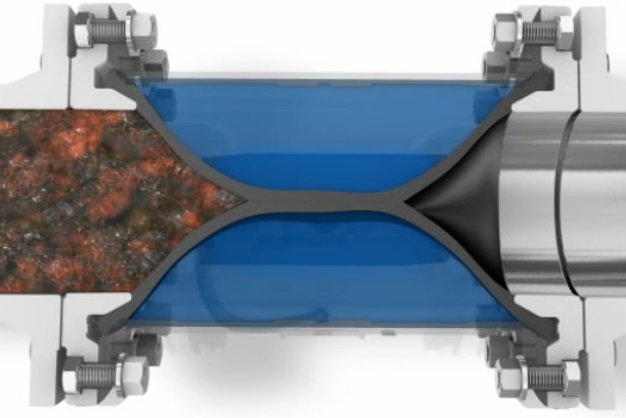
Gate Valves
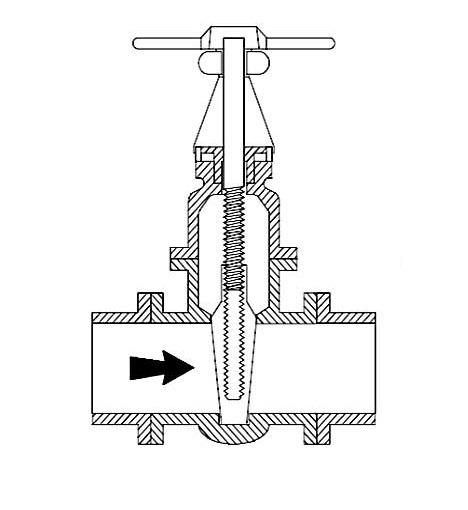
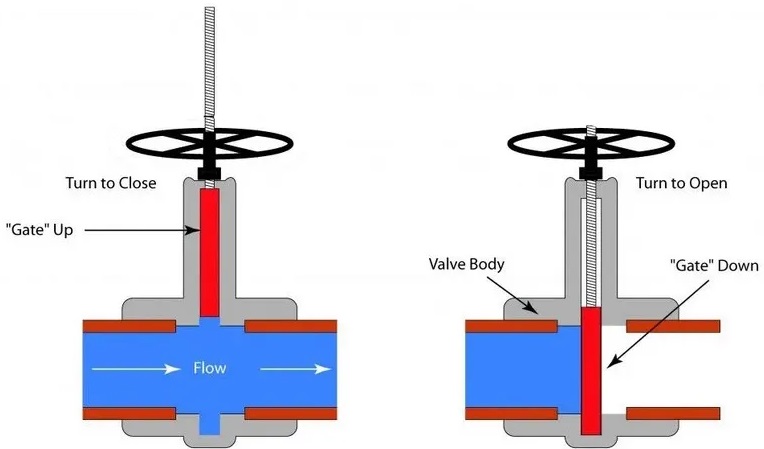
Gate valves are specifically used in isolation applications in various piping systems by operating in the fully opened or fully closed positions.
They are not recommended for regulation purposes as most of the flow change occurs near shutoff phase with a relatively high fluid velocity
causing disk and seat wear and eventual leakage.
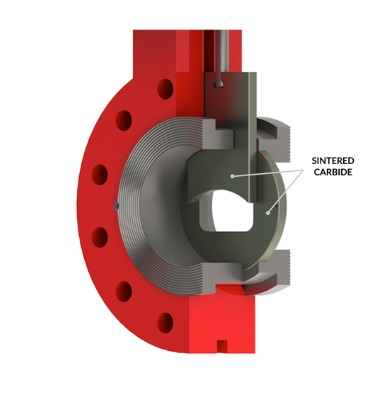
Special Orifice layout can be provided by specific vendors modulating the flow without affecting the valve body
espcially in case of abrasive fluids.
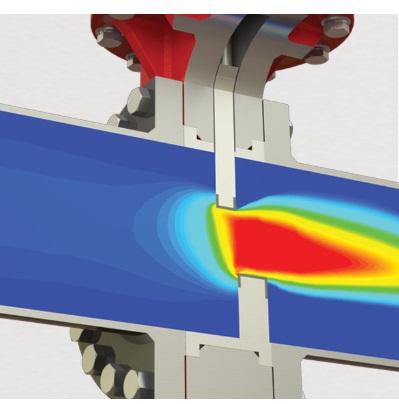
When slurry passes through a control valve, the restricted opening causes the fluid to accelerate. This high-velocity media is then
directed into the valve’s body and downstream pipe wall. The continuous erosion can result in frequent valve replacements,
damaged piping and downtime.
Ball Valves
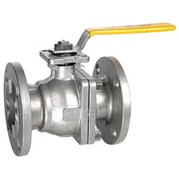
An Isolation Type of Valve. The ball valve is normally used as positive shut off valves. The positive shut off is attained because of the soft seats.
Special design is also available with ball having shaped port for regulation. Metal seated ball valves are also available for high temperature service.
They are also considered as quarter turn valves as the closing action is achieved by rotating the lever by 90Deg.
They are one of the most widely used valves in process industries because of their versatility, support pressures up to 1000 bar and temperatures up to 482°F (250°C).
Sizes typically range from 1/2 to 30 inches. They are easy to repair and operate.
Butterfly Valves
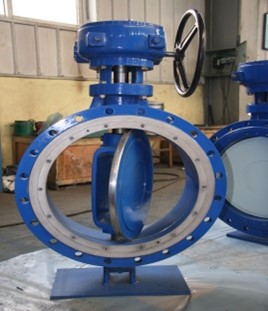
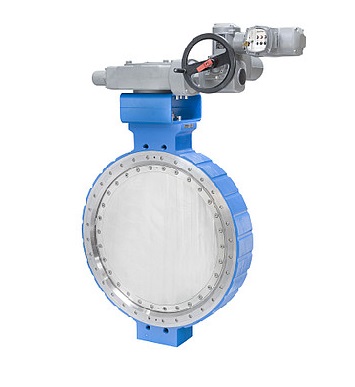
Isolation and Regulation Valves broably used in Mechanical and Process Piping. Butterfly valve is one of the types of valves positive shut-off quarter-turn valve.
It’s majorly used in utility services such as air, gas, steam, or liquid because of two reasons: they are lower in cost and also they are light in weight.
Globe Valves
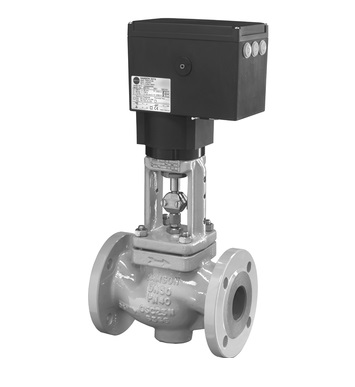
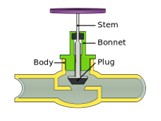
A globe valve, is mainly a dedicated control valve for flow regulation in a pipeline usually actuated by an external motor (electrical or pneumatic),
consisting of a movable disk-type element and a stationary ring seat in a generally spherical body. It exists as linear or equal percentage type.
Angle Seating Valves
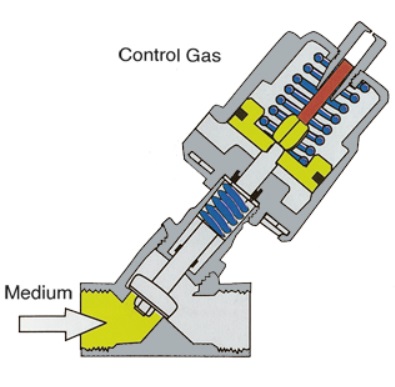
An angle seat piston valve is a manually operated or pneumatically-controlled valve with a piston actuator providing linear actuation to lift a seal off its seat.
It is similar to the globe valve but utilizes a Y shaped structure which increases the valve cavity flow by 30%. The seat is set at an angle to provide the maximum
possible flow when unseated. Angle seat piston valves are particularly suited to applications where high temperatures and large flow rates are required,
such as steam or water. When used in reverse some models of angle seat piston valve will eliminate water hammer when operated. It can be used also as hygienic valve
for sanitary applications (isolation and regulation valve) as SS304/316L stainless steel materials to be used in checmical liquid and sterilazation systems of processing systems.
Knife Gate Valves
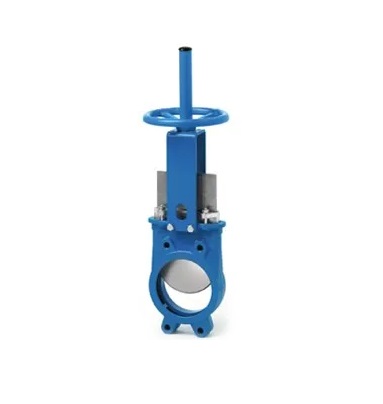
This valve is a type of valve designed specifically for handling slurries, sludge, or other thick, viscous, or abrasive materials.
Knife gate valve manufacturers design these valves for Isolation applications.
These valves are often used in wastewater treatment plants, mining operations, and other industrial processes where such materials are common.
Often equipped with a self-cleaning mechanism to prevent clogging and ensure smooth operation even with heavy and particulate-laden fluids.
Designed for easier maintenance and cleaning, considering the nature of the materials they handle.
Pinch Valves
A pinch valve is a type of valve that uses a pinching mechanism to control the flow of fluids, commonly used in wastewater treatment, chemical processing,
and beverage industries.
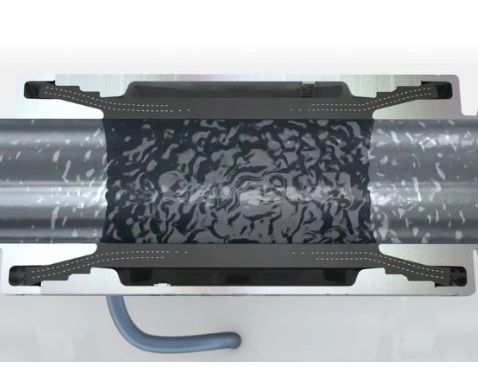
It consists of a flexible tube (usually made of rubber or a similar material) that is pinched closed by a mechanism to stop or control the flow while
being operated manually, pneumatically, or electrically. Pinch valves are especially suited for applications involving slurries, granular products, and fluids with suspended solids,
as the flexible tube can handle abrasive and corrosive materials without being damaged.
Minimal wear and tear on the valve mechanism since the fluid does not come into contact with the moving parts whereas it is easy to maintain and replace the flexible tube.